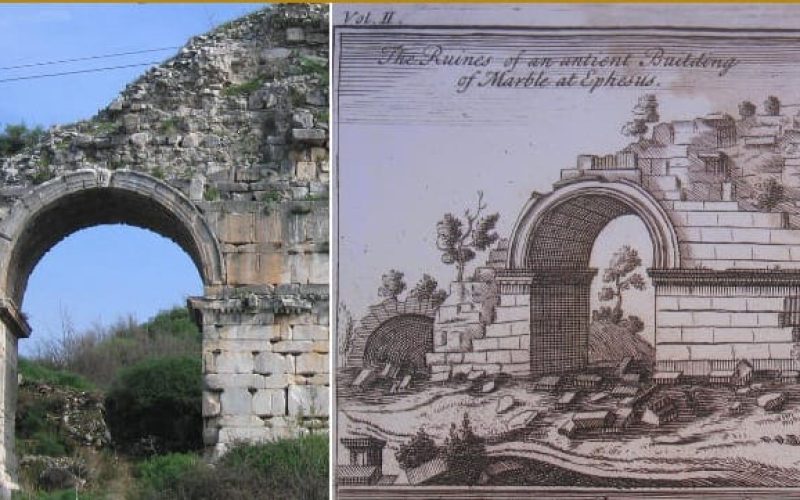
Ephesus Stadium Project
Surface cleaning work at the Stadium of Ephesus, one of the world’s most important ancient cities, began in January 2024, and it is planned that it will be fully restored by 2030 and will be among the important tourist areas to visit for our valued guests in Ephesus. The construction process may take even longer, as funding and grants determine the timeframe.
Excavation work is expected to begin at important sites belonging to Ephesus around the Ephesus Stadium. The famous spice market of Ephesus, located directly opposite the Ephesus Stadium and currently buried approximately 10-12 meters underground, is also planned to be unearthed through surface clearing work by 2030. Currently, no surface clearing work has been carried out at the famous spice market of Ephesus, and this is not planned for 2026.
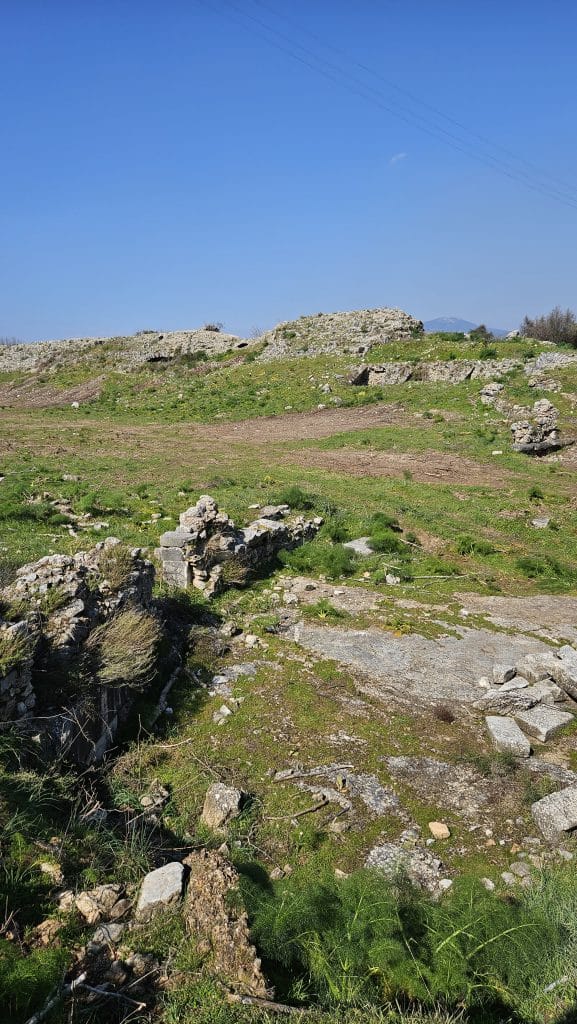
Meanwhile, the Ephesus Stadium has a very striking feature that sets it apart from other stadiums. Within its north facade lies an incredibly large pool structure. The most remarkable aspect of this structure is that no other stadium has a pool of this size. This feature highlights the significance of the Ephesus Stadium. You can see a partial, but not yet fully excavated, view of this structure in the pictures.
The remains of the stadium and gymnasium are currently closed to visitors to Ephesus. Visitors can only view this large structure from behind a high wire fence. Ephesus boasts many important and large structures. Examples include the Ephesus ancient theater, considered one of the largest ancient theaters in the world;
The Temple of Artemis, one of the Seven Wonders of the World (and the largest temple of its time); the Ephesus Commercial Agora, one of the largest agoras in the world; the Celsus Library, the third largest library in the world; the Temple of Serapis, among the largest temples in the world (it is expected to be restored and opened to visitors by 2030, as surface cleaning has been completed); the Ephesus Harbor Baths, currently inaccessible but with completed surface cleaning; and the Basilica of St. John, recognized by the Christian world and considered one of the largest basilicas in the world.
This stadium structure of Ephesus is located near the Koressos Gate, one of the two main entrances to Ephesus. It is situated in the lower part of the city. The reason the gate is named Koressos is because King Koressos of Lydia was very generous in the construction of the Temple of Artemis, providing significant financial assistance and donating marble columns, as well as helping the people of Ephesus.
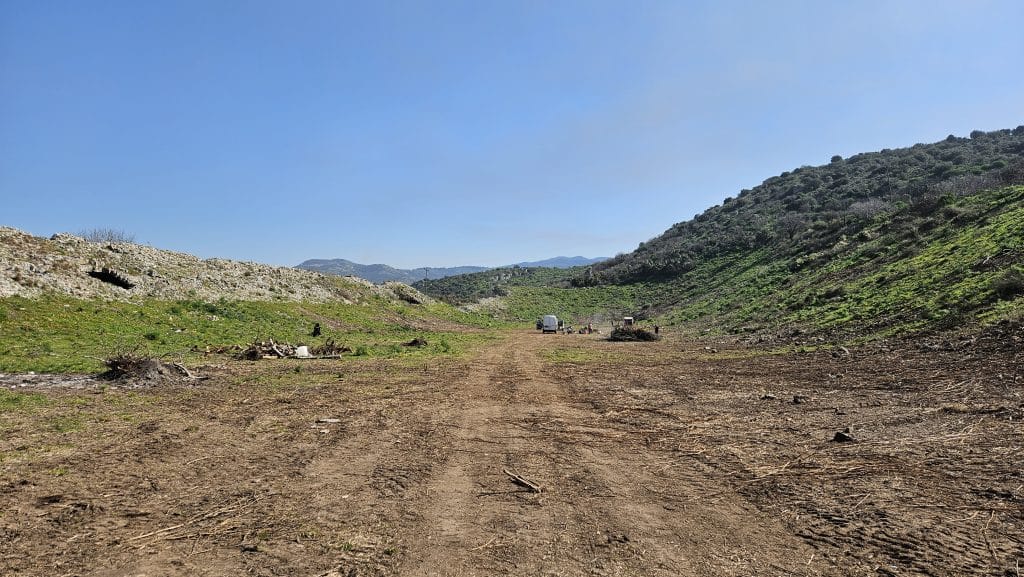
Apart from this, the Magnesia Gate is located in the upper part of the Ephesus settlement. This is because this gate faced the nearest ancient city of Magnesia (Magnesia ad Meandrum), which was the focal point of trade, festivals, and competition between the Ephesians and Ephesians. The distance between Magnesia and the ancient city of Ephesus is approximately 20 km by horseback (approximately 35 km by car).
The ancient city of Magnesia also contains the large Temple of Artemis and the Magnesia Stadium, one of the largest stadiums in Anatolia. Another gate is the Hadrian Gate, through which the sacred ceremonial processions exited the city. This gate leads to the sacred grove of Ortygia, where Ortygia, a very important character in mythology, is thought to have lived.
The Ephesus Stadium was enlarged and expanded during the reign of Roman Emperor Nero (54–58 AD) through donations from the public and benevolent aristocrats. The original grandstands, built on the slope at the foot of Mount Pion (Panayır Dağı) on the south side, were extended towards the top, and grandstands supported by a retaining wall and a vaulted substructure were added to the north side.
The expanded stadium had the traditional long U shape, but its form was quite irregular. A section enclosed by a wall, approximately 50 x 40 meters, at the eastern (round) end of the stadium was probably used as an arena for gladiatorial contests. U-shaped stadiums are structures that typically house athletics tracks or ancient race tracks, with one side open or enclosed by a different structure (stage, monument). At 230 meters long and 40 meters wide, the Ephesus Stadium was a large structure with a seating capacity of 13,000.
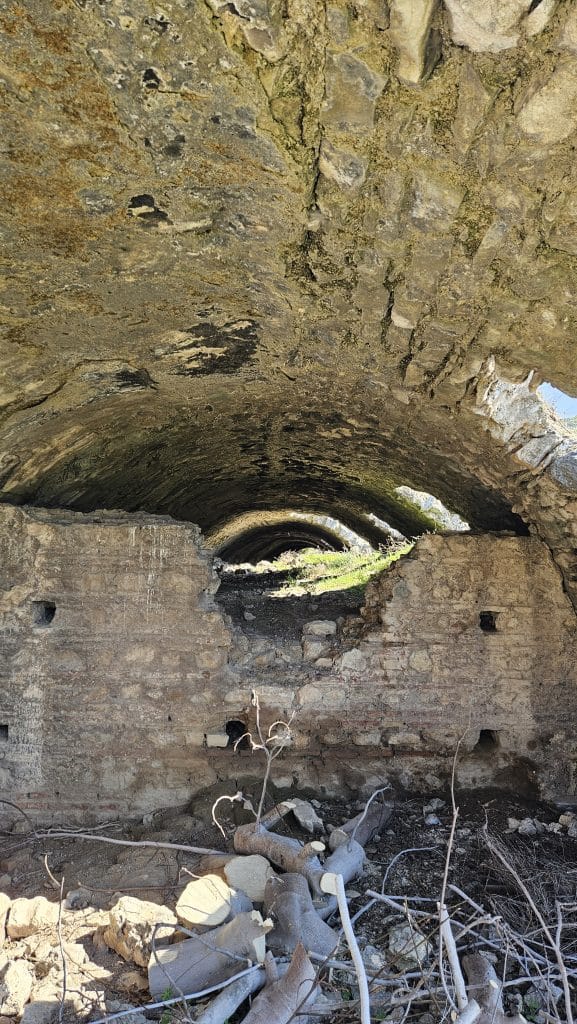
The Vedius Gymnasium was located just north of the Ephesus stadium, directly next to the city walls. The bath-gym complex measured 135 x 85 meters and covered a total area of approximately 13,000 square meters. Funded by M. Claudius P. Vedius Antoninus Phaedrus Sabinianus and his wife Flavia Papiani, and dedicated to Artemis and Emperor Antoninus Pius, the structure opened in 147-149 AD. It was renovated around 400 AD and used until the end of the 5th century. It suffered severe damage from a fire in the 6th century and never regained its former glory.
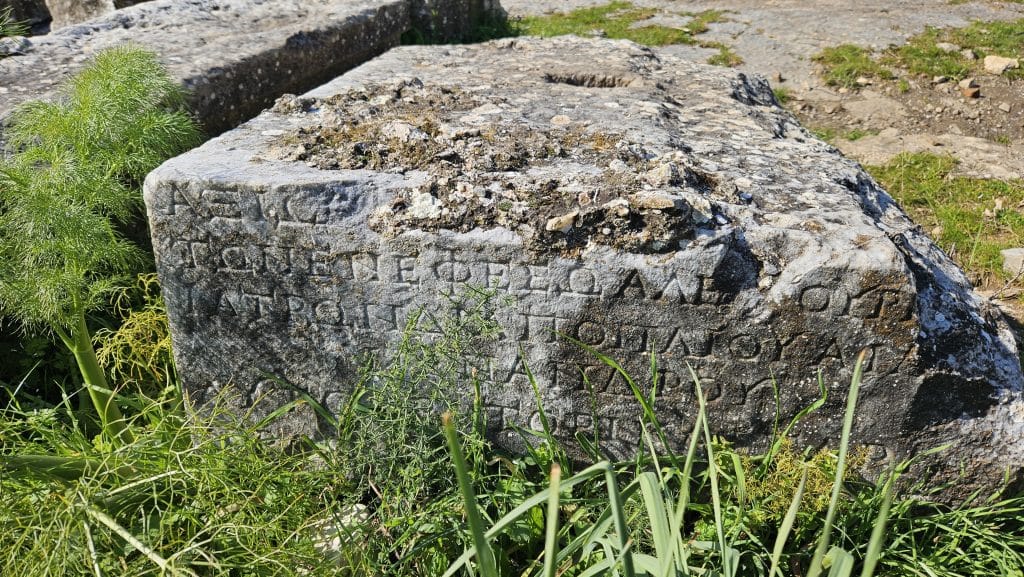
Among the prominent examples of stadiums in Anatolia, we can mention the ancient Magnesia Stadium with a capacity of 30,000 people. The three largest stadiums in Anatolia are the ancient stadiums of Magnesia ad Meandrum (in Aydın province) with a capacity of 30,000 people, the ancient city of Aphrodisias (also in Aydın province) with a capacity of 30,000 people, and the ancient city of Leodicea (in Denizli province) with a capacity of 25,000 people.
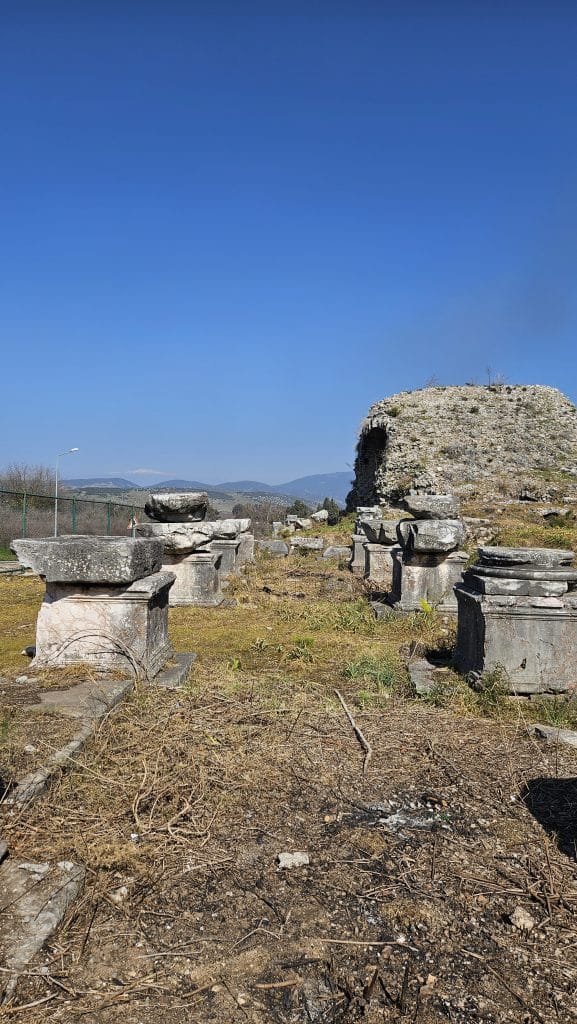
In the 4th century AD, during the reign of Emperor Constantine the Great, who ended the persecution with the Edict of Milan in 313 AD, and later during the reign of Theodosius I, who succeeded the ancient Roman Empire, harsh laws were enacted banning pagan beliefs, temples, and festivals. These laws also sanctioned the looting of artifacts and temples from that period, resulting in significant destruction of areas used for pagan activities.
For example, parts of the Ephesus Stadium were dismantled and used in the construction of St. John’s Basilica, begun and completed during the reign of Justinian I (construction started in 548 AD and ended in 565 AD). The architects of St. John’s Basilica were Isidorus of Miletus and Anthemius of Tralles. These famous architects also designed the Hagia Sophia in Istanbul.
In conclusion, the fact that 15% of the ancient city of Ephesus has been excavated since 1890 reveals just how large the city was, the scale of its structures, and the promise that excavations will continue for centuries to come, providing us with more information about the past. This makes this beautiful and magnificent ancient city of Ephesus even more mysterious.
We should remember that Ephesus was one of the four largest cities in the ancient world, both during the Greek and Roman periods. The ancient city of Ephesus offers us the opportunity to visit it both day and night.