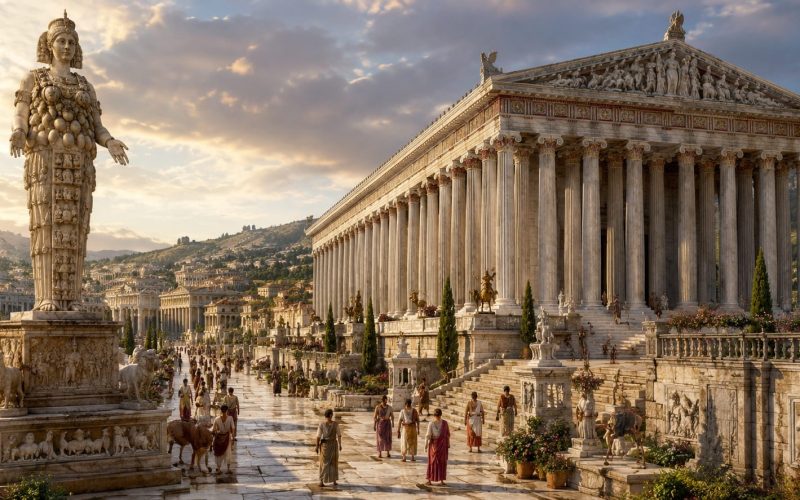
The origin of the goddess Artemis and the god Apollo.
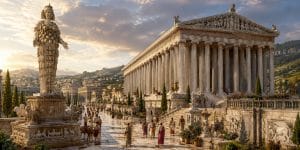
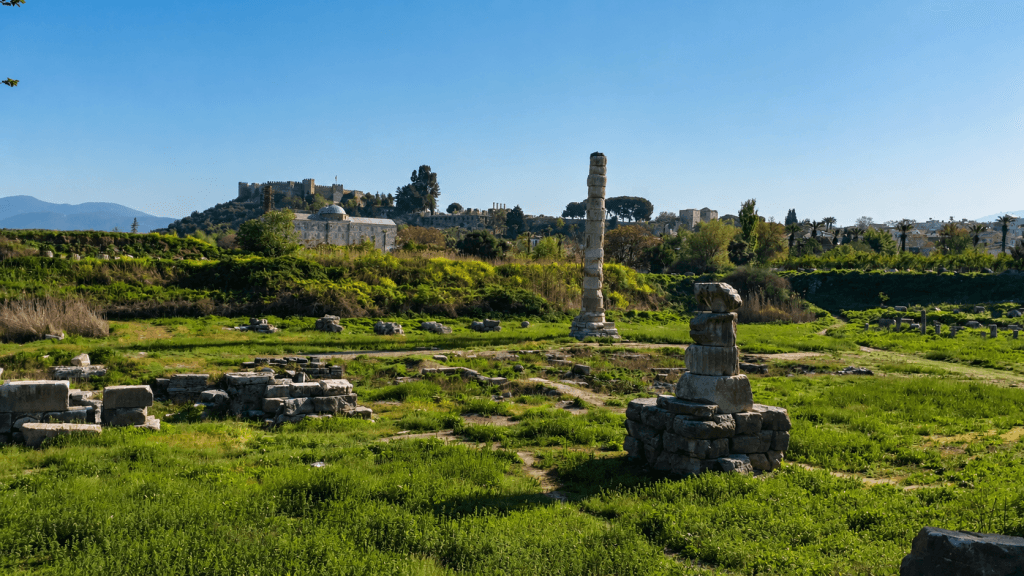
The Temple of Artemis was located southwest of Ayasuluk Hill where Selcuk Castle is located. It was considered to be one of the Seven Wonders of the World by ancient writers. Today on Ephesus tours you can only see the ruins of the foundations of this marvellous construction of the Hellenistic Age, entirely made of marble and full of sculptured columns’ capitals and shafts.
The first Temple Artemis is said to have been erected around 800 BC. The first temple had a sacred stone that was believed that it was fallen from “Jupiter”. The goddess Artemis of Ephesus called Diana in Rome, was not the same as the one worshipped in Greece. The Artemis of Ephesus was the goddess of fertility. The Greek Artemis was the goddess of hunting.
So, the cult of Artemis in Ephesus doesn’t just begin with the “Greek goddess Artemis.” It has a deeper connection to the Anatolian mother goddess tradition, the local understanding of sacred spaces, and Lydian influence. Therefore, the Ephesian Artemis differs from the classical Greek Artemis: she was perceived not only as a huntress goddess but also as the city’s protector, a great goddess providing fertility and security. Essentially, the Goddess Artemis is the Western Aegean version of the Phrygian Cybele.
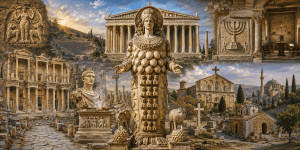
After local people who believed Cybele and Ionians began to live together, they synthesized the Greek Artemis and Cybele and they all adored Artemis of Ephesus. She was often depicted as a female figure draped with eggs, multiple breasts, which were the symbols of fertility, from her waist to the shoulders, a thrown on her head, bulls, deers, and queen bees downwards. The temple was used for pilgrimage, trade, and tourism.
It became an important port city visited by tourists from vast distances, kings, and artisans due to the fame of this temple. When the Goths invaded the city, the Temple of Artemis was burnt down in the 260s, it was not rebuilt again. The Roman Emperor Constantine accepted Christianity and people lost their interest in this religion of Artemis.
Today it is still accepted as the third oldest wonder of the ancient world. Through many books, including the Bible, it can be read though it has been much longer.
Antipater of Sidonm mentioned that about the Temple of Artemis with these words: ”I have seen the walls and Hanging Gardens of ancient Babylon, the statue of Olympian Zeus, the Colossus of Rhodes, the mighty work of the high Pyramids and the tomb of Mausolus.
But when I saw the temple at Ephesus rising to the clouds, all these other wonders were put in the shade”.
“I have set eyes on the wall of lofty Babylon on which is a road for chariots, and the statue of Zeus by the Alpheus, and the hanging gardens, and the colossus of the Sun, and the huge labour of the high pyramids, and the vast tomb of Mausolus; but when I saw the house of Artemis that mounted to the clouds, those other marvels lost their brilliancy, and I said, “Lo, apart from Olympus, the Sun never looked on aught so grand.” Antipater of Sidon – Greek Anthology IX.58
You can still see a single column that is erected to remind the people of the original site in Ephesus and the Temple of Artemis’s remains stand on the exhibition in the British Museum.
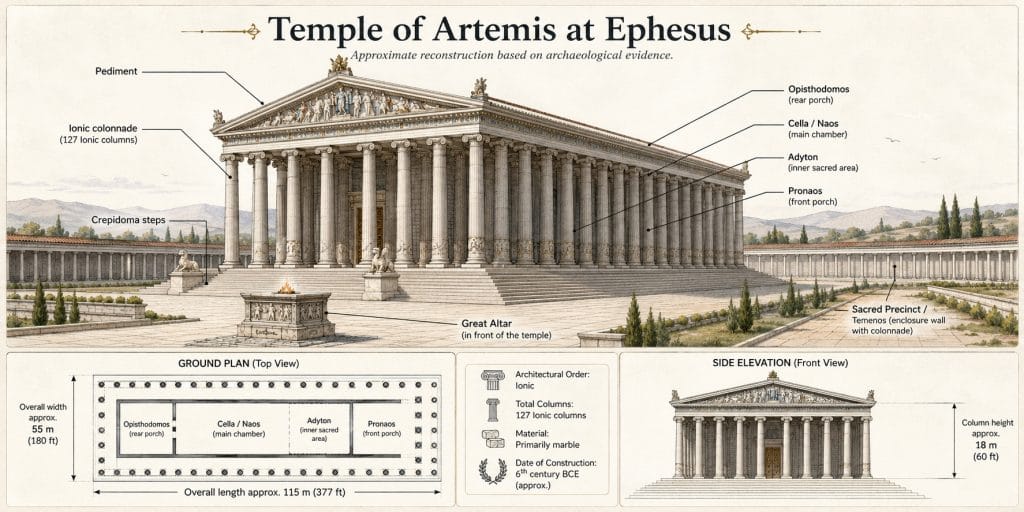
Archaeological information about the Temple of Artemis
The Temple of Artemis was destroyed and reconstructed several times throughout the history of Ephesus. After construction in 800 BC, another temple, more magnificent than the first one, was constructed with high stone columns in the same strip In 600 BC.
The Artemision, or sanctuary of Artemis, was the main sacred center of Ephesus. According to the work of the Austrian Archaeological Institute, this site became a sacred center of international, rather than regional, importance from the early periods known as the “Dark Ages” through the Archaic period.
Its excavation history is also very long: John Turtle Wood (1869–1874), Otto Benndorf and Carl Humann (1895), D. G. Hogarth (1904–1905), Anton Bammer (1965–1995), and Sabine Ladstätter (2014) have repeatedly examined this site.
In today’s archaeological interpretation, the early phases are particularly important. Naos 1 dates to approximately 660/640 BC and is considered a very important example of a peripteros, or temple surrounded by columns, in early Greek architecture. Then Naos 2 was built around 640/620 BC.
This second phase shows the pedestal of a large cult statue, green schist blocks, and votive offerings; this indicates that Lydian influence is now becoming more pronounced in the sacred area.
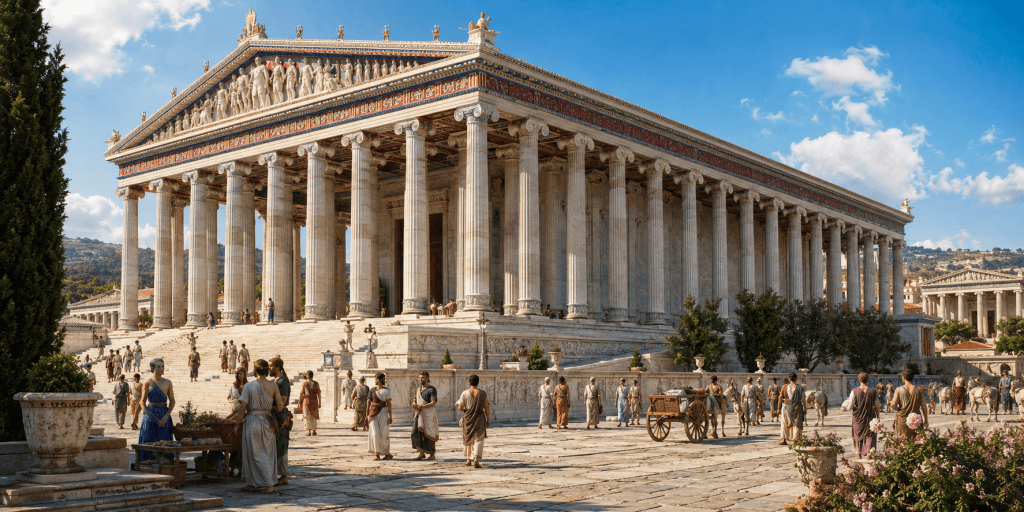
The temple was in the Ionic order and had a dipteros plan. A dipteros means a double row of columns surrounding the structure. This gave the temple extraordinary grandeur.
According to Pliny’s measurements, the temple was approximately 129.5 meters long and 68.6 meters wide. The same tradition describes 127 columns, approximately 18.3 meters high, and a double row of columns surrounding all four sides. These measurements are particularly useful for understanding the temple’s Late Archaic/Classical-Hellenistic splendor.
The column diameter, according to the measurement given for the Hellenistic column drum of the Temple of Artemis in Ephesus, now in the British Museum, is approximately 1.97 meters. The columns taper from bottom to top.
The Temple of Artemis was the first sanctuary that was erected of marble. 127 columns in total were carved and circular, 20 m (60 feet) in length with Ionic capitals. It was ornamented by the bronze statues of Amazons, adorned with golden pillars, paintings, and silver statuettes. The structure was rectangular and had marble steps surrounding the temple. This temple was the pride of Ephesus city.
Today in Selçuk, we see scattered stones on the ground and a single column standing upright. But in antiquity, in the same place, there stood a temple, rising like a giant forest of marble columns, gleaming in the light, its lower sections adorned with reliefs.
The excavations of Artemision are very important not only for architecture but also for economic history. Some votive offerings and treasure finds in the temple foundations are associated with some of the world’s earliest examples of coinage. Nineteen electrum coins were found in a vessel in the foundations of the Temple of Artemis in Ephesus; these are considered one of the oldest coin hoards.
This means that the Temple of Artemis was not only a place of worship; it was also a center where the wealthy, kings, merchants, and city elites offered sacrifices, gained prestige, and displayed their economic power.
The Hellenistic column drum in the British Museum also demonstrates the richness of the temple’s ornamentation. The marble drum is carved with figures such as Thanatos, Hermes Psychopompos, Persephone, and Plouton; the piece dates to between 340 and 320 BC and was found in the southwest corner of the Artemis sanctuary.
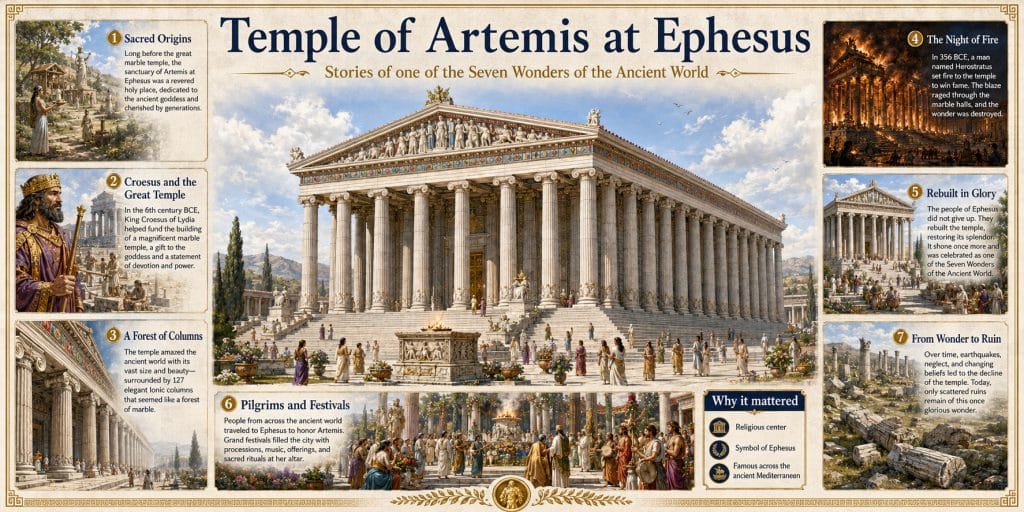
Stories about the goddess Artemis and the Temple of Artemis in Ephesus.
1. Story – Building a Temple in a Swamp
According to ancient sources, the temple was deliberately built on swampy ground. The reason was to reduce the impact of earthquakes. According to Pliny, compressed coal and woolen hides were used in the foundation. Modern excavations confirm layers of coal and mortar/marble fragments; however, the woolen hide portion has not been archaeologically proven.
The most striking detail here is that “the Ephesians and their architects may have considered the softness of the ground not as a weakness, but as an advantage in absorbing earthquake energy.“
2. Story – The Architect Who Built the Temple of Artemis Contemplated Suicide
This story is told in Pliny’s Natural History. One of the biggest problems during the construction of the Temple of Artemis in Ephesus was the enormous marble lintel stone to be placed above the entrance. This stone was so large that the architect could not fit it perfectly flat on the door jambs. According to Pliny, Khersiphron was overcome with despair and began to contemplate suicide.
While Khersiphron was sleeping that night, the goddess Artemis appeared to him in a dream. Artemis told him to live, informing him that she herself had placed the stone in its proper position. The next morning, it was indeed seen that the stone had settled perfectly in place under its own weight.
This story shows us two things:
Firstly, the construction of the Temple of Artemis was a very difficult task from an engineering point of view. People who could not complete the job properly or who struggled with setbacks could not bear this humiliation and seriously considered suicide or even acted on it. Secondly, the ancient Ephesians saw this temple not only as a structure built by human labor, but also as a sacred structure built with the protection and intervention of Artemis.
3. Story – The Lydian State’s Attack on Ephesus and its Aftermath
The Lydian State’s attack on Ephesus occurred most frequently during the reign of Croesus/Karun, around 561–560 BC. According to the ancient source Herodotus, Ephesus was the first Greek city Croesus attacked after ascending to the throne.
Croesus besieged Ephesus. The Ephesians used a very interesting method to protect the city: They stretched a rope/cable from the city walls to the Temple of Artemis. This meant: “This city is now dedicated to Artemis; it is under the goddess’s protection.”
Herodotus states that the temple was approximately 7 stadia from the old city; this is about 1–1.5 km. We call this area the asylon, or the zone of immunity.
As a result of this clever and politically astute move by the people of Ephesus, Croesus of Lydia did not completely destroy the city. Ephesus came under Lydian rule, meaning it largely lost its independence; however, the city was not burned and destroyed. Some sources also suggest that Croesus may have reorganized Ephesus around the Artemision, or the Temple of Artemis, or contributed to its relocation.
King Croesus of Lydia later provided great support to the Temple of Artemis and the people of Ephesus. It is generally accepted that Croesus contributed to the magnificent reconstruction of the Temple of Artemis in Ephesus around 550 BC, even donating columns to the temple.
But Lydian rule did not last long. Around 546 BC, the Persian King Cyrus defeated Lydia and captured Sardes. Thus, the Lydian state came to an end; Ephesus also fell under Persian rule after Lydia.
The major period that made the temple world-famous was the reign of the Lydian King Croesus/Karun. Documents indicate Croesus as the most important benefactor of the first great marble temple, namely Dipteros I.
This information doesn’t come solely from written sources; it’s also supported archaeologically. A fragment of a marble column base in the British Museum dates to between 550–510 BC, was unearthed from the Temple of Artemis in Ephesus, and is recorded as being associated with the name Croesus.
This is very important information. Because the idea that Croesus helped build the temple is not just a legend; it is strong historical evidence supported by column fragments, inscriptions, and excavation data.
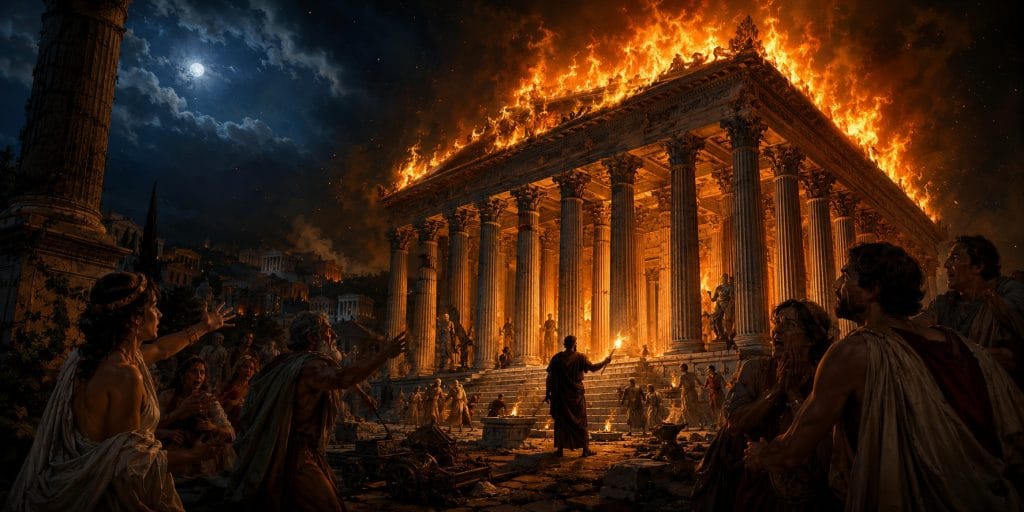
4. Story – Herostratus’ Fire and the Birth of Alexander the Great
The temple’s most famous disaster was the fire of July 21, 356 BC. According to ancient tradition, a man named Herostratus set the temple on fire to immortalize his name in history. It is said that Alexander the Great was born that same night.
When the Ephesians questioned this event, the common explanation given by the High Priest, the temple priestesses, and the workers was that the goddess Artemis, in her demigod form, helped with the birth of Alexander the Great on July 21, 356 BC, during the fire.
The impact of this story is immense. In fact, the idea of ”herostratic fame,” or gaining notoriety through evil, is associated with the name of Herostratus.
Later, Plutarch conveyed this event to our time with a satirical and witty saying: Artemis couldn’t protect her own temple because she was preoccupied with the birth of Alexander the Great.
By the way, Herostratus, the eccentric one from Ephesus, was a very skilled shoemaker. This information might interest you, as you might get to visit these eccentric shoemakers and shoe repairmen on your Ephesus tours.
5. Story – Alexander the Great’s desire to take responsibility for the upkeep of the Temple
When Alexander arrived in Ephesus, he made the following offer to the Ephesians: “I will cover all the past and future construction costs of the Temple; but let my name be inscribed on it.” This is recounted by Strabo. In other words, Alexander wanted to cover the entire cost of the Temple’s reconstruction, not just a small donation.
However, the Ephesians did not accept this offer. Because the Temple of Artemis was the most sacred structure in Ephesus, and having Alexander’s name inscribed on the temple could mean, for the Ephesians, associating the Temple’s fame with Alexander. Without offending him, they gave a very clever answer:
“It is not appropriate for one god to offer sacrifices to another god.”
With these words, the Ephesians, the most politically astute and skilled lobbyists of the ancient world, elevated Alexander to the status of a god, but at the same time rejected his offer. Strabo describes this Ephesian response as diplomatic and wise.
As a result, Alexander the Great wanted to contribute to the construction of the Temple of Artemis. In return, he requested that his name be inscribed on the temple. The Ephesians, however, honored Alexander by saying, “You too are like a god; one god cannot offer sacrifices to another god,” thus ensuring that the temple remained in Ephesus and dedicated to Artemis.
After this event, Alexander the Great, leaving Ephesus with a heavy heart, fulfilled his request with the Temple of Athena in Priene, providing significant support to it and ensuring his name was inscribed there.
Why is the Temple of Artemis in Ephesus so famous and why was it one of the Seven Wonders of the World?
The first banking system of the ancient world first began at the Temple of Artemis.
But it wasn’t a place like a modern bank with tellers, clerks, and debit cards. Its true identity was a sacred space and temple; however, it also served as a treasury, a vault, and a credit center.
People from Ephesus, foreigners, kings, and even some cities could entrust money and valuables to the Temple of Artemis in Ephesus. Dio Chrysostomos states that not only the money of the Ephesians but also that of “people, states, and kings from everywhere” was kept in the Temple of Artemis, and that this was because the temple was considered very secure.
Why was it safe? Because stealing from the temple was not just theft, but a sacred crime against the goddess, an act of disrespect/sacrilegium. Therefore, people entrusted their wealth to Artemis’s protection. The documented page about the Temple of Artemis also states that the temple functioned not only as a religious center but also as an institution similar to a bank.
During the Roman period, Artemision had its own administration and economic power; it possessed properties, revenues, leased areas, and various economic resources in the Kaystros valley. Lilli Zabrana’s work states that Artemision was recognized as a secure deposit bank during the Roman Imperial period and that its transactions were economically significant.
Furthermore, the Ephesian army occasionally plundered Magnesia (Magnesia ad Maeandrum) and surrounding cities, leaving the spoils at the Temple of Artemis in Ephesus. Moreover, because trade was highly developed in Ephesus, the money earned for the city was kept in the Temple of Artemis.
“The Temple of Artemis in Ephesus was a temple; but it also functioned as one of the most important sacred banks of the ancient world.”
To summarize the situation briefly…
“The Temple of Artemis was not merely a place of worship; it was Ephesus’s sacred treasure, its safe haven, and one of the most powerful centers in the ancient world, functioning like a bank.”
Thargelion, derived from the word thalysios, means harvest festival.
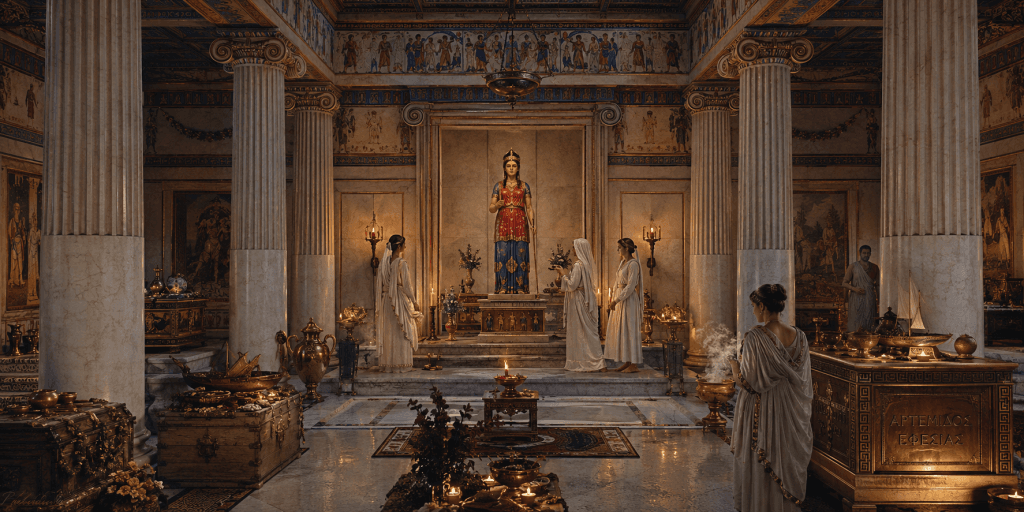
During the Thargelia festival, which began to be celebrated every May 7th around 500 BC, a statue of the goddess Artemis, approximately 2.5 – 3 meters tall, made of cedar wood with arms of ivory and gold, was paraded through the streets of Ephesus from the temple of Artemis (Xoanon).
Meanwhile, a highly disciplined cleaning operation was underway in the Naos (Sacred Area) of the Temple of Artemis. This was because the Naos area within the Temple of Artemis was being cleaned while the statue of Artemis was being paraded through the streets of Ephesus. This festival lasted for two days. Additionally, within the Naos area, there was a separate section called the skeuophylakion, which was essentially the treasury.
The root of the word Skeuophylakion is as follows:
skeuos / σκεῦος = object, container, tool
phylakion / φυλάκιον = place of protection, guard post, place of safekeeping
So the literal meaning is approximately:
“The place where things are kept”
or in a religious context:
“the room where sacred vessels and treasure are kept.”
Considering it within the context of the Temple of Artemis, the skeuophylakion is not exactly a “bank”; rather, it can be understood as the temple’s sacred storeroom/treasure chamber. Gifts dedicated to Artemis, valuable vessels, ceremonial objects, perhaps records and treasures were kept in such secure compartments.
Pilgrims and visitors to the Temple of Artemis would offer coins or personal items as donations to the goddess. These donations were recorded and registered in the Temple’s inventory.
For example, Nico of Ephesus would come to the temple to express his love and gratitude to the goddess Artemis, donating an amount of money he deemed appropriate (e.g., 1 drachma) in the hope of being blessed and glorified by her.
A year later, around the time the Thargelion festival began again, or on any day but with a minimum of 10 months having passed, Nico of Ephesus would go to the Temple of Artemis in Ephesus to perform sacrifices and other rituals, hoping to find out if he had been blessed or loved by Artemis.
He would wait, expecting to receive news from the priests about whether his offering had been accepted by Artemis.
Afterwards, the priests (Priest of the Temple of Artemis Melissa = Bee) who kept track of the inventories would return the money Nico had given them when he arrived, and would also give him an additional amount equal to the original (if he gave 1 coin, he would receive 2 coins back).
This was because he was loved and blessed by Artemis. In this way, the world’s first interest-based banking system began to be used in the Temple of Artemis in Ephesus.
Subsequently, this concept, particularly the invention of money by the Lydians, found its way into the temples of all ancient cities. The temples of ancient cities now served as banks and storage places for valuables.
Furthermore, if you visit the Basilica of St. John in Selçuk, you can see how the concept of a treasury evolved and how treasures were stored in churches and places of worship, demonstrating how the same culture manifested itself in other forms.
Ephesus and the Temple of Artemis were the most famous and earliest fashion center of the ancient world.
The word we will consider here is;
Kosmeterion, which in Ancient Greek is κοσμητήριον / kosmētērion. Its meaning can be translated as: place of decoration, arrangement/dressing room, place where sacred objects are prepared. The word comes from the verb kosmeō / κοσμέω, which means “to arrange, to decorate, to furnish”.
The word kosmos / κόσμος also comes from the same root; one of its primary meanings is “order” and “ornament“.
In the ancient world, Greek gods were made of cedar wood. Why? Cedar statues could be dressed in clothing. Marble statues, on the other hand, could not be clothed.
Approximately a month before the Thargelion festival, during the month of Munykhion/Mounikhion (early April), a very lively event would begin in the ancient city of Ephesus. This involved preparations for a competition to dress the statue of Artemis from Ephesus, in which a maximum of five families from Ephesus, selected by a jury of ten, could participate. The winning family from Ephesus would have the honor of dressing the cedar-wood statue of Artemis.
At the same time, the entire Ionian and Attic coasts, the Attic islands, the Southern Mediterranean, and the Aegean region were adorned in the main color of the dress designed by the winning family in the competition.
Therefore, the Temple of Artemis was a pioneer in both the banking system and the fashion world, and a driving force of the ancient world.
For the Thargelion festival, which began after this competition, the cult statue of Artemis was first prepared in the temple. The statue was not an ordinary statue, but was considered the sacred presence of the goddess. It wore a chiton or peplos (the dress design of the winning family and the main and secondary colors used), that is, an undergarment; and on top of that, a stiff, ornate outer garment called an ependytes.
This outer garment featured sacred figures such as deer, griffon, bull, bee, eagle, and rosette. In documented descriptions of the Ephesian Artemis statue, this outer garment is specifically referred to as “ependytes / outer garments,” and the animal ornaments on it are described in detail.
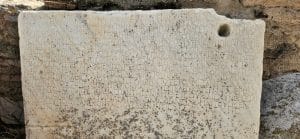
On the day of the festival or before the sacred ceremony, the statue was probably cleaned, covered with the new clothes of the winning family, and adorned with jewelry, garlands, necklaces, and sacred symbols. Ornate clothing was important in the Ephesian cult of Artemis; indeed, documents mention an inscription indicating that “ornamental robes” were sent for the statue of Artemis Ephesia in the Temple of Artemis in Ephesus.
Who were the judges at the Goddess Artemis fashion competition in Ephesus?
Kritai: The principal jury members; respected citizens chosen by the city.
Agonothetes: Head of the competition; sometimes influential in the decision-making and awarding process.
Ergastēriarchēs: Owner of a large workshop.
Gaioktēmōn: Landowner or large landowner.
Hoi hiereis tēs Ephesias Artemidos: Priests of the Temple of Artemis in Ephesus.
Agoranomoi: Officials who supervised the marketplace in ancient cities.
Plousioi kai Gnōrimoi Politai: Wealthy and prominent citizens / wealthy elite citizens.
Prytanis: City head / Executive officer / Prytaneion officer.
Panegyriarch: Organizer and economic/administrative head of the festival.
Gymnasiarchos: Gymnasium manager / sports school area manager / officer responsible for the physical education and competitions of young people.
Famous families in Ephesus during the Ionian period:
• Androklos/Kodros lineage – The founding royal line of Ephesus.
• Heraclitus’ aristocratic family – An ancient noble family with a right to the basileus/priesthood.
• Melas – Pindar family – A tyrannical family related to the Lydian kingdom, ruling Ephesus.
• Syrphax – Pelagon family – A powerful oligarch/tyrant family loyal to the Persians.
• Sons of Echeanax – A political elite family at the end of the 4th century BC.
Famous families in Ephesus known during Roman times:
• Vedii / Flavii Vedii family – The most powerful local aristocratic family
• Celsus-Aquila family – The most famous family to leave a monument
• Tiberius Claudius Aristion and Iulia Lydia Laterane family – One of the largest donors of water infrastructure
• Sextilius Pollio family – A significant family in aqueduct and fountain donations:
• Flavii Damianii / Titus Flavius Damianus family – The wealthy environment connected to the Artemision road and elite culture
• Quintilius Valens Varius family – The family seen with the temple and baths on the Street of the Curetes
• Caius Vibius Salutaris – The largest inscribed foundation donor
• Female aristocrats: Iulia Lydia Laterane, Scholastikia, Vedia Phaedrina, Varilla and others
Let us always remember why Ephesus and the Temple of Artemis are so important. Let us carry this valuable and special cultural heritage into the future. Let us conclude our blog with the words of Demetrius:
“The Artemis of the Ephesians is great!”