About the 9th Ephesus Opera and Ballet Festival
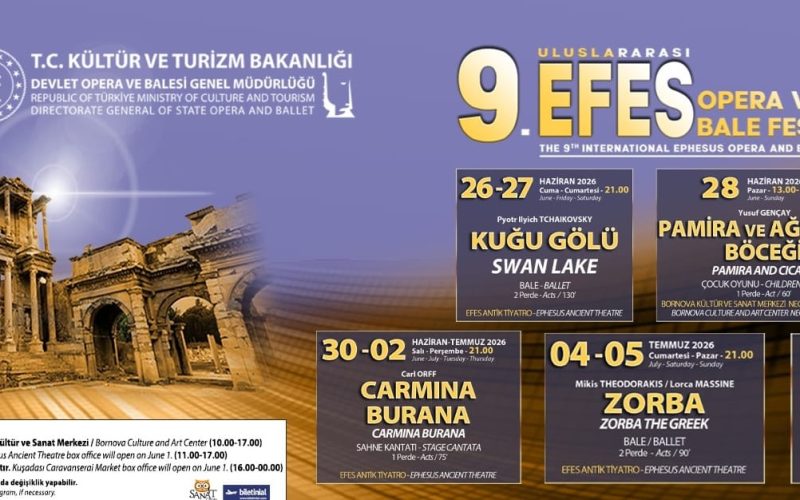
The 9th International Ephesus Opera and Ballet Festival 2026 program takes place between June 26 and July 8, 2026; the program includes 5 works in total, with 9 performances: 1 opera, 2 ballets, 1 stage cantata, and 1 children’s play. Venues: Ephesus Ancient Theatre and Bornova Culture and Arts Center Necdet Aydin Stage.
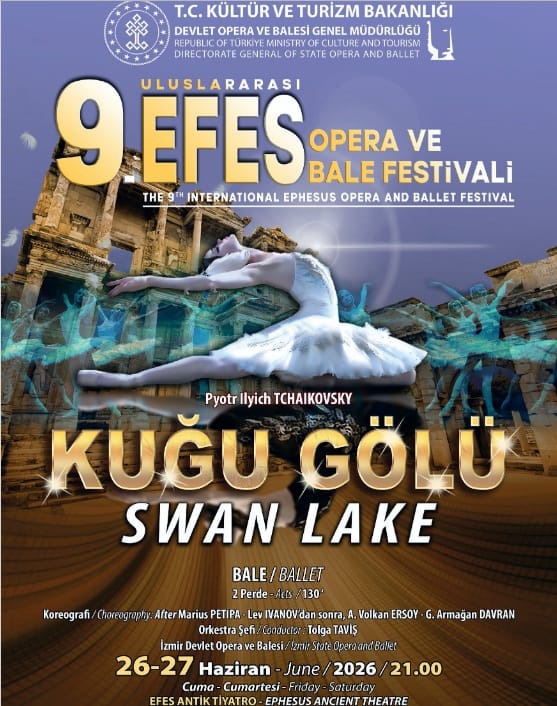
1. Swan Lake – 26/27 June 2026 : 21.00 pm – Ephesus Theater
Genre: Ballet, 2 acts, approximately 130 minutes.
Performed by: Izmir State Opera and Ballet.
Synopsis: The story begins with the celebrations of Prince Siegfried’s 21st birthday. His mother tells him he should marry. While Siegfried is out hunting, he encounters Princess Odette, who is transformed into a swan during the day by a curse from the evil sorcerer Rothbart. The prince falls in love with her and wants to break the curse. However, Rothbart’s daughter, Odile, the “Black Swan,” deceives Siegfried; thus, love, betrayal, and magic become central to the story.
Artists and creative team:
Composer: Pyotr Ilyich Tchaikovsky.
Conductor: Tolga Taviş.
Choreography: A. Volkan Ersoy and G. Armağan Davran, following the style of classical choreographers Marius Petipa and Lev Ivanov.
Set design: Çağda Çitkaya, costume design: Nursun Ünlü,
Lighting design: Oğuz Murat Yılmaz.
Why is it important?
Swan Lake is one of the most famous works of classical ballet. The White Swan Odette represents innocence, while the Black Swan Odile represents deception and the dark side. Therefore, not only the dance but also the emotions of the characters are very important.
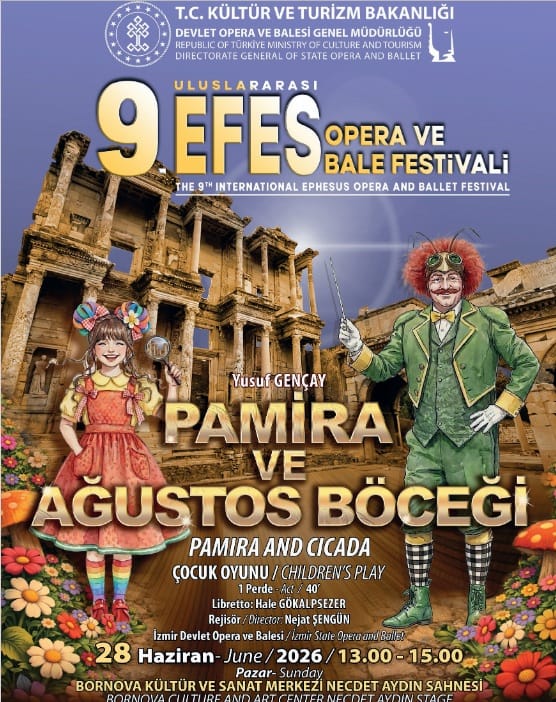
2. Pamira and the Cicada – 28 June 2026 – 13.00/15.00 pm – Izmir
Genre: Children’s play, 1 act, approximately 60 minutes.
Stage by: Izmir State Opera and Ballet.
Synopsis: Pamira, a little girl who loves nature and animals very much, encounters cicadas one summer day. She looks at the well-known “Cicada and the Ant” story from a different perspective. Pamira learns that every living thing in nature has a separate purpose, voice, and value. The play teaches children to listen to nature, not to be prejudiced, to empathize, and to appreciate the beauty of art.
Artists and creative team:
Composer: Yusuf Gencay.
Director: Nejat Şengün.
Set design: Hale Gökalp Sezer.
Costume design: Sevcan Yenihayat Horozgil.
Choreography: Şebnem Şenel.
Lighting design: Emre Yürekli.
Project design: Ahmet Şeren.
Suitable for:
Age limit is given as 3+ That’s why this artwork is the most child-friendly event at the festival.
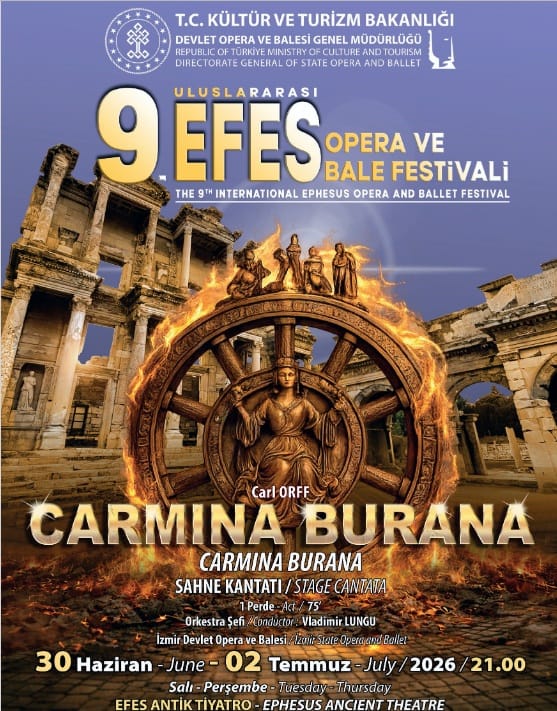
3. Carmina Burana – 30 June / 02 July – 21.00 pm – Ephesus Theater
Genre: Stage cantata, 1 act, approximately 75 minutes.
Performed by: Izmir State Opera and Ballet.
Synopsis: This work is not a “narrative play” in the conventional sense; rather, it is a very powerful stage music piece performed with a large orchestra, choir, and soloists. Carl Orff created the work influenced by medieval poems and songs found in a monastery near Munich. The texts deal with nature, love, fate, human passions, and the variability of life.
Artists and creative team:
Composer: Carl Orff.
Orchestra conductor: Vladimir Lungu.
Choir conductor: Orhan Öner Özcan.
Children’s choir conductor: Başar Ünal.
Also, the program announcements list Ayşe Şenoğul (soprano), Burak Dabakoğlu (tenor), and Nejad Beğde (baritone) as soloists.
Why is it so impressive?
Carmina Burana is particularly known for its very powerful choral sections. Announcing it in a large and historic place like the Ephesus Ancient Theatre makes the atmosphere even more impressive.
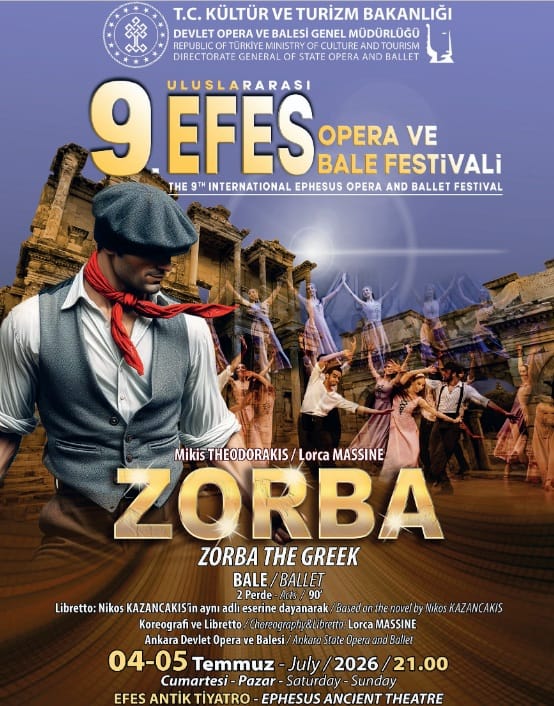
4. Zorba the Greek – 04/05 July 2026 – 21.00 pm – Ephesus Theater
Genre: Ballet, 2 acts, approximately 90 minutes.
Performed by: Ankara State Opera and Ballet.
Synopsis: The quiet life of a small Greek town changes with the arrival of the American John. John is impressed by the town’s traditional life and falls in love with the beautiful widow Marina. Marina’s attraction to a foreigner creates a reaction in the town. John’s friend, the free-spirited Zorba, stands by this love and zest for life. However, the pressure from the townspeople leads to tragic events. In the end, Zorba’s sirtaki dance symbolizes holding on to life despite suffering, forgiveness, and resilience.
Artists and creative team:
Music: Mikis Theodorakis and Lorca Massine.
Choreography and libretto: By Lorca Massine, inspired by Nikos Kazantzakis’ novel Zorba the Greek.
Set and oriental costume design: Gürcan Kubilay.
Costume design: Tülay Şimşek,
Lighting design: Fuat Gök.
Why is it important?
Zorba isn’t just about dance; it’s about the idea of ”keeping going on living, no matter how hard life gets.” The Sirtaki section is generally the most memorable part of the piece.
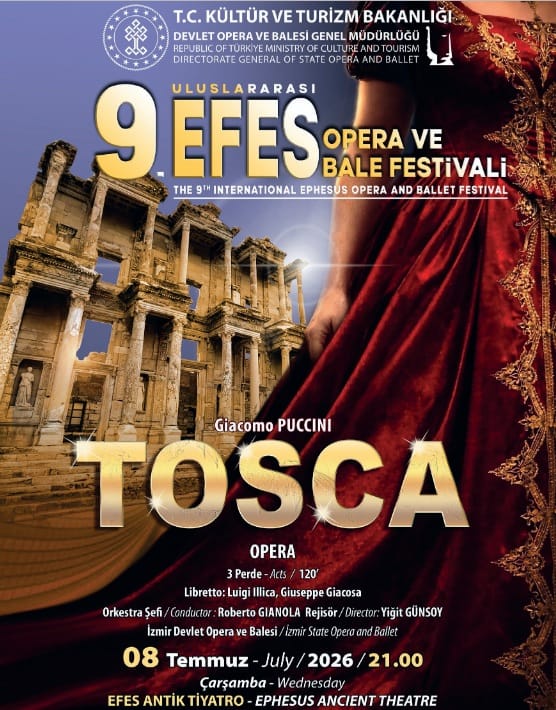
5. Tosca – 08 July 2026 – 21.00 pm – Ephesus Theater
Genre: Opera, 3 acts, approximately 120 minutes.
Performed by: Izmir State Opera and Ballet.
Synopsis: This is Giacomo Puccini’s famous opera. It takes place in the early 1800s. The story features three main characters: Tosca, an opera singer; Cavaradossi, a painter; and Scarpia, the police chief. Scarpia is an abusive, oppressive, and self-serving man. Cavaradossi is a painter with libertarian ideals. Tosca is a strong character who lives for both love and art. The events unfold around love, jealousy, oppression, betrayal, and tragedy.
Artists and creative team:
Composer: Giacomo Puccini.
Libretto: Luigi Illica and Giuseppe Giacosa.
Orchestra conductor: Roberto Gianola.
Director: Yiğit Günsoy.
Chorus conductor: Orhan Öner Özcan.
Children’s chorus conductor: Başar Ünal.
Set and costume design: Gülden Sayıl.
Lighting Design: İnan Sefer.
The main roles are played by Filiz Güneş as Tosca and Ivan Magrì as Cavaradossi; soloists from the Izmir State Opera and Ballet are also in the cast.
Why is it important?
Tosca is a very dramatic opera. The music constantly increases the tension on stage. Therefore, even for someone new to opera, the subject matter is easy to follow: love, power, fear, and sacrifice.
In conclusion:
Swan Lake is the most fairytale-like and visually elegant work for lovers of classical ballet.
Carmina Burana, with its large chorus and orchestra, will be heard very powerfully at the Ephesus Ancient Theatre.
Tosca, on the other hand, is the opera with the most dramatic story and the most intense character conflict.