Archaeological Ephesus Half-Day Tour Itinerary
You will be picked up by your guide from your meeting point. Your first stop will be the Temple of Artemis, where you will spend about 15 minutes. You will enter Ephesus from the upper city of ancient Ephesus ruins with your guide. You will be admired by;
- Celsus Library which is the highlight and masterpiece of Ephesus
- The largest Greco-roman theater of the Ancient World
- Hadrian Temple
- Terrace Houses
- The Marble Street
- The Odeon
- The Temple of Domitian
- The Commercial and State Agora
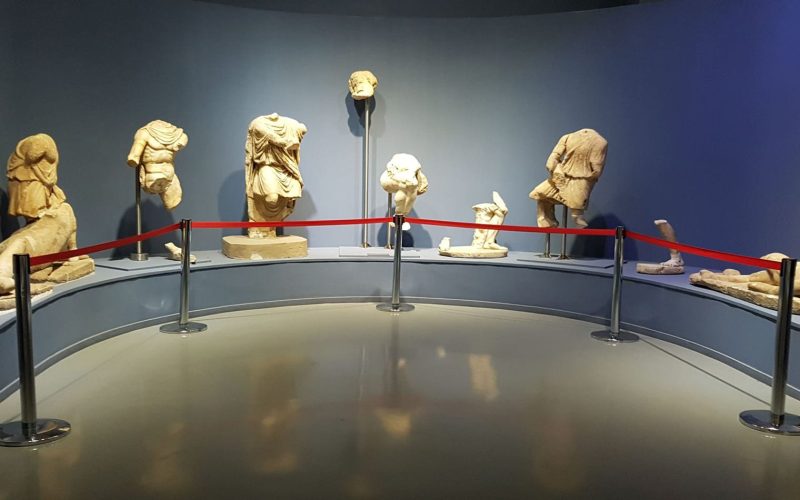
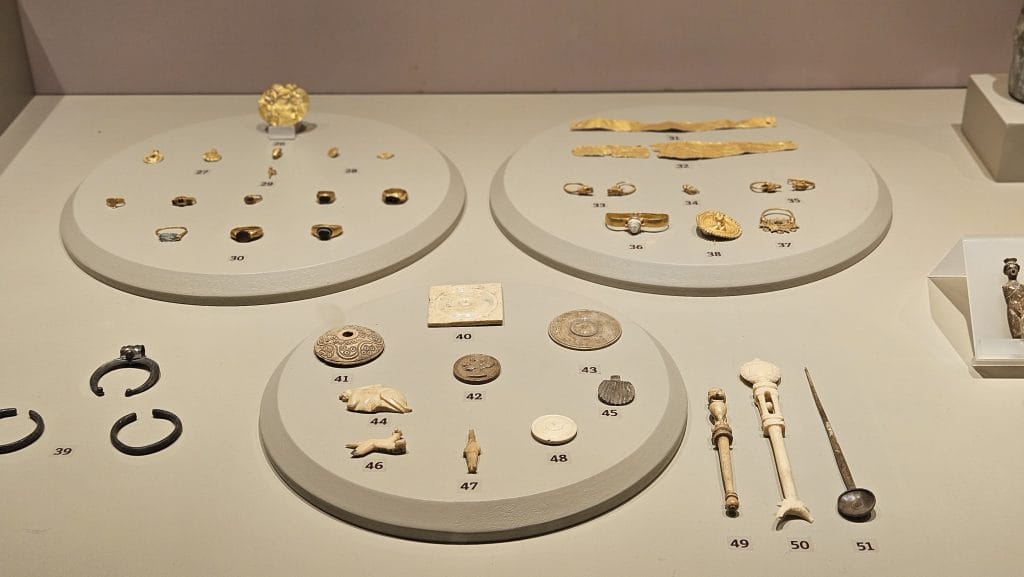
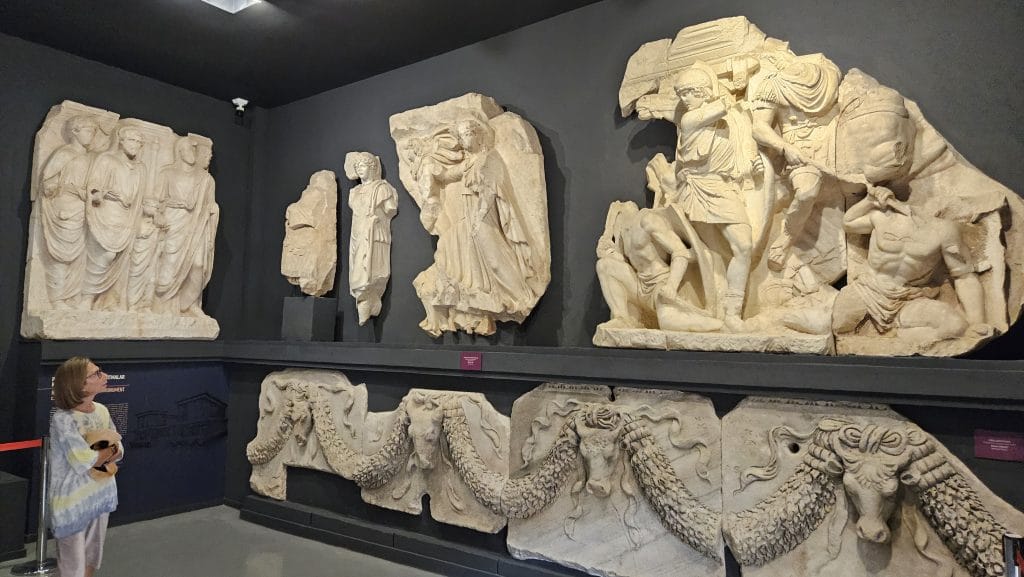
After you will visit all when you are on the way to The Archaeological Museum of Ephesus the Museum of Ephesus. You can see the ancient artefacts unearthed in the excavations of the ancient city of Ephesus in the archaeology museum.
After you all have seen the sites you will have your lunch in a Turkish local restaurant with delicious homemade Turkish food. There are options for vegetarians and gluten-free.
Sites to Visit
- Temple of Artemis: One of the Seven Wonders of the Ancient World.
- Ancient City of Ephesus: The largest uncovered Ancient City of Turkey.
- The Archaeological Museum of Ephesus: You can see important artefacts unearthed from the Ephesus excavation in Ephesus Museum.
Duration Time
This will be your Private Half-Day Archaeological Ephesus Tour, which means the duration of your tour depends on your interest. For the general idea, you will spend about 4 or 5 hours on this tour.
Recommendations: There are uneven ancient streets in Ephesus, so please have your comfortable shoes and clothing, If you visit in summer please get your hat and sunblock creams and water.
Tour Prices
Private Half-Day Archaeological Ephesus Tour price is changing according to the number of adults. Please ask the price.
Children aged 7 and under can enter Ephesus and other historical sites around Ephesus free of charge. You must present an ID, passport or a photo of these documents to show your child’s age at the entrance.
PS: We would like to introduce to you the local cultural aspects of Ephesus showing handmade Carpet & Rug Art Weaving Teaching–Village and Ceramic Center or Leather Company – An Opportunity Not To Be Missed!
Temple of Artemis: One of the most important structures in Ephesus and the world. Therefore, it is one of the Seven Wonders of the World.
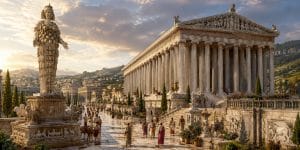
The Temple of Artemis in Ephesus, or Artemision, was not just a temple; it was the religious heart of Ephesus, its economic power, its sacred treasure, and its symbol of identity. Today, only the foundations, stone fragments, and a single column that was later erected remain where we see it in Selcuk; but in antiquity, this was a vast sacred site, considered one of the Seven Wonders of the World, where pilgrims came from all over the Mediterranean.
UNESCO also notes that little remains of the Temple of Artemis in Ephesus, but that it attracted pilgrims from all over the Mediterranean in ancient times.
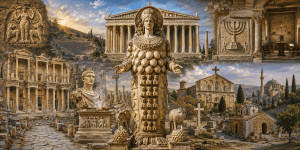
The Ephesian Artemis was different from the archer-hunter Artemis we know. The goddess here was connected to the ancient Anatolian mother goddess tradition. For the Ephesians, Artemis meant fertility, abundance, city protection, nature, and sacred power. UNESCO states that the roots of the Ephesian Artemis cult lie in the Anatolian mother goddess character.
In the Ephesian Artemis statues, the goddess stands upright and frontally. Her body features oval protrusions; these were formerly interpreted as “the multi-breasted Artemis,” but modern research sometimes explains them as eggs, bull testicles, symbols of fertility, or votive ornaments.
Her dress depicts animals, bees, and sacred motifs. Britannica also describes the Ephesian depiction of Artemis as having an older, mother goddess character, different from the typical Greek style.
Ephesus Archaeological Museum: The Ephesus Archaeological Museum is a highly respected and valuable museum among the world’s archaeological museums. The museum has two large storage areas, and within Ephesus itself, there are tens of thousands of artifacts, many of which are yet to be displayed, bearing the traces of the people of Ephesus. In this modest museum, you will find halls filled with beautiful and valuable artifacts from Ephesus.
In 2000, the Gladiator section opened at the Ephesus Archaeological Museum, generating considerable interest. Efforts are underway to reopen the Gladiator hall by 2030. Currently, the Ephesus Museum houses a section dedicated to weapons used in the ancient world.
Ephesus Ancient City: What can be said about its magnificence? Discover this magnificent city, one of the four largest cities in the world during both the Greek and Roman periods. Explore this magnificent and incredible city of Ephesus, which ruled the world for approximately 2000 years and boasts the world’s richest marble architecture, with our guides.
Visit the Temple of Artemis, one of the Seven Wonders of the World
The Temple of Serapis, the world’s largest
The world’s largest theater
The world’s second largest Roman Baths
The world’s third largest library
The world’s richest and most magnificently developed hillside houses
The first gladiator school in Anatolia
The magnificent city of Ephesus, which hosted the first gladiator fights in Anatolia, awaits you.