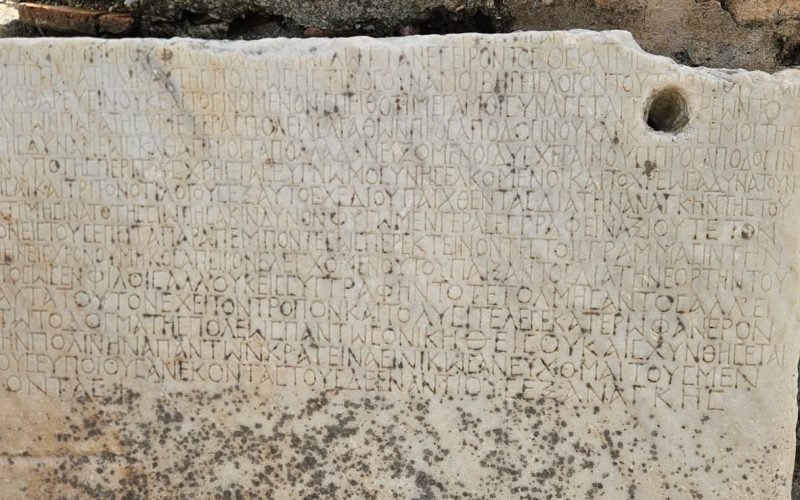
“With auspicious fortune“.
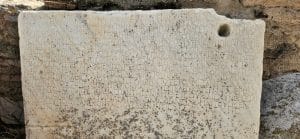
A summary of the sacred law passed down from our ancestors:
The Prytanis, the city’s sacred-administrative official, must light the fires on all the altars. He must also provide the incense, fragrant sacred substances, and necessary offerings to the gods.
These offerings must be performed according to the specific deity to whom they are to be made, on the day prescribed by ancient traditions. The quantity, size, and order of the offerings are determined.
The proper performance of these sacred duties will be explained and supervised by the official/hierophantes who is knowledgeable in sacred matters.
For each god, hymns will be sung in accordance with tradition; prayers will be offered during sacrificial ceremonies, processions, and nightly rites. These prayers will be offered in the name of the priesthood, the Roman people, and the people of Ephesus.
Furthermore, the honorary shares and duties to be granted to prytanis and holy officers will also be implemented according to this system.
In short, this inscription is a religious-administrative legal text describing how sacred ceremonies were to be performed around the Prytaneion in Ephesus, including the lighting of fires, incense and offerings, hymns, prayers, and the responsibilities of those in charge.
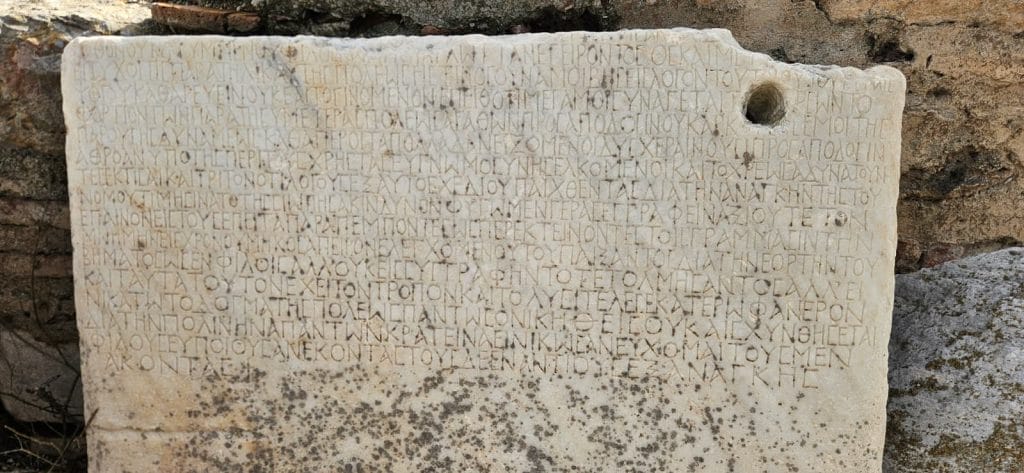
This inscription is specifically about the Artemis, Hestia, and Roman-era city cults of ancient Ephesus.
What was done in ancient Ephesus during festivals and important days?
1. In Ephesus, religion was part of city administration.
Today, “religion” and “municipal/state affairs” are considered separate. But this was not the case in Ancient Ephesus. In Ephesus, sacred duties were official duties that maintained the order of the city. The people believed that if the right offerings were not made to the gods at the right time, it could bring misfortune, disease, famine, earthquake, war defeat, or port/trade problems to the city.
Therefore, sacred duties were determined by traditional law. The text in the inscription you sent also summarizes a sacred order in the style of “law passed down from ancestors,” or patrios nomos.
Academic publications state that this Ephesian inscription assigns the prytanis the task of performing rituals and sacrifices; and that the public hierophantes, the official knowledgeable in sacred matters, advises/supervises him. The same text also mentions hymns, prayers, the distribution of shares to sacred officials, and punishment for failure to perform duties.
2. The Center of Sacred Duties: The Prytaneion
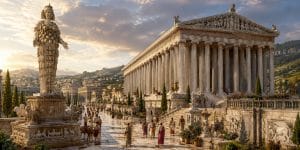
In Ephesus, one of the most important centers of this system was the Prytaneion. The Prytaneion shouldn’t be thought of simply as a “town hall.” It served as the official reception hall, the city’s hearth, and the location of the sacred fire. In Ephesus, religious ceremonies, official banquets, and matters related to state protocol were held in the Prytaneion; it is said that the sacred fire, associated with Hestia, symbolized the heart of the city.
Hestia was the goddess of the hearth, home, city, and order in the Greek world. Just as the hearth of a home was the center of the family, the sacred fire in the city was like the “living heart” of Ephesus. The burning of the fire signified the continuation of the city’s order and its connection with the gods.
That’s why the “lighting of fires” mentioned in the inscription is so important. This wasn’t just a small act like lighting a candle; it meant re-establishing the sacred order of the city.
3. The Most Important Official: The Prytanis
The prominent figure in the inscription is the prytanis. The prytanis was a high-ranking official in Ephesus, involved with both administration and sacred ceremonies. The inscription describes the prytanis’s role as follows:
He will light the fires at all the altars.
He will prepare the incense and fragrant sacred substances.
He will have the offerings made to each god on each day, according to tradition.
He will follow the order of the ceremonies.
So the prytanis is a kind of “responsible for sacred ceremonies.” But he is not an ordinary official; his work is done on behalf of the state. Because in Ephesus, making offerings to the gods also meant performing a duty on behalf of the people of Ephesus.
The important point here is this: Prytanis may not be doing everything alone. But the law holds his responsible. So whether she lights the fire herself or has helpers, he is responsible if the ceremony is not performed correctly.
4. The person who knows sacred knowledge: Hierophantes
Another important figure mentioned in the inscription is the hierophantes. The word roughly means “the person who explains/reveals sacred things.”
This person knows:
Which god is offered to on which day? Which incense is used? In what order are the sacrifices made? Which hymns are sung? To whom are which prayers directed? How are mistakes corrected if they occur during the ceremony?
Therefore, the hierophantes is the expert in the knowledge and traditions of the ceremony. Just as the prytanis is the administrative head of the ceremony, the hierophantes is the expert in the sacred rules. The inscription describes the prytanis performing the rituals under the guidance/supervision of the public hierophantes.
5. How did the ceremony day begin?
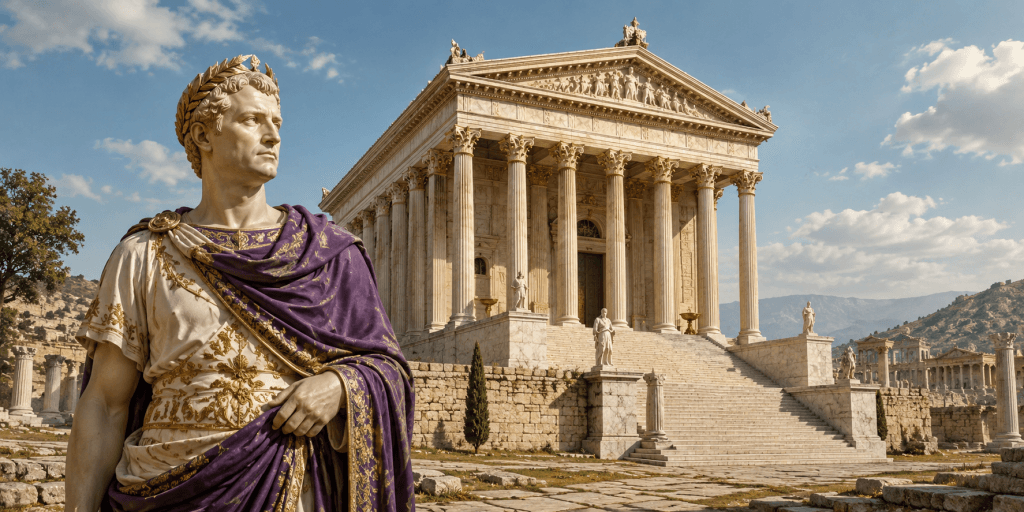
When a sacred day arrived, the calendar was consulted first. Because in ancient cities, each god, each sacred site, and each ceremony had its own designated day. The inscription also implies that “it was determined by tradition which days offerings were to be made to which gods.”
Then the preparations would begin:
The altar is cleaned.
The fire is prepared.
Incense is brought.
Fragrant oils or resins are prepared.
If there is a sacrifice, the animal is chosen.
Those who will sing hymns or the ceremonial group are prepared. If there is to be a procession, the path and line are arranged. The officials take their places.
The aim at this stage is to appear before the god in an orderly and respectful manner, not “randomly.” In the ancient world, the correct sequence of the ceremony was crucial. It was believed that any mistake would spoil the effect of the ceremony.
6. Lighting the Fires
One of the first tasks that stands out in the inscription is the lighting of fires on the altars.
This fire is essential for sacrifices and incense, because according to ancient belief, the scent, smoke, and fire rising from the offerings reach the gods. Incense and fragrant scents, in particular, were signs of respect for the gods.
In Ephesus, we can imagine it like this:
Early morning. Officials gather around the Prytaneion. The altars have been cleaned. The Prytanis, or those acting on his behalf, light the fire. Hierophantes knows which altar belongs to which god and in what order the rituals will be performed. Incense is prepared. When the first smoke rises, the ceremony begins. This fire was not just a physical fire; it was considered a visible sign of the connection between the city and the gods.
7. Incense and fragrant offerings
The inscription specifically mentions incense, fragrant substances, and sacred aromatic offerings. These were generally resins, frankincense, myrrh, scented oils, or similar substances.
Why was scent so important?
Because in ancient religious thought, fragrance was something befitting the divine realm. The human world is dusty, dirty, and mortal; the realm of the gods is beautiful, clean, and radiant. Therefore, using fragrance in ceremonies meant making the environment suitable for the god.
When incense was burned, it created both a visual and olfactory effect. Smoke rose, the surroundings smelled pleasant, and people entered the ceremonial atmosphere. This actually strengthened the psychological aspect of the ceremony as well.
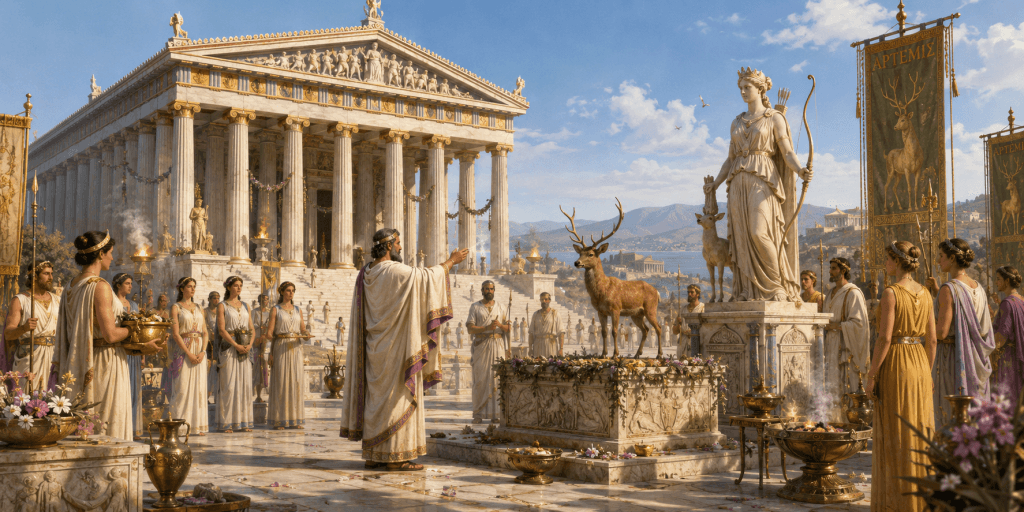
8. How was the sacrificial ceremony performed?
The Ephesus inscription mentions the order of the sacrificial rituals; however, it does not describe every minute step of the sacrifice in detail. Nevertheless, considering the general sacrificial customs in the Greco-Roman world, the ceremony would have proceeded as follows:
A sacrificial animal was chosen. Typically, animals such as sheep, goats, bulls, deer, cows, or pigs could be used. It was important that the animal was healthy and suitable. The animal could be decorated, perhaps with a wreath on its head.
Then the animal was brought to the altar. Those present would perform a ritual of purification by washing their hands. Small offerings such as barley grains, wine, or water could be used. A prayer was recited, the name of the deity was invoked, and the purpose of the ceremony was stated.
After the animal was slaughtered, some parts were set aside for the god and burned in a fire. A portion of the meat was eaten by the people participating in the ceremony. Thus, the sacrifice was not only an “offering to the god,” but also a sacred meal that brought the community together. In ancient Greek sacrificial traditions, rituals such as burning incense, slaughtering the animal, examining the organs, eating the meat, singing hymns, and praying can be seen together.
Therefore, a sacrificial ceremony in Ephesus was a religious, social, and political event. The god was honored, the people gathered, officials became visible, and the order of the city was reaffirmed.
9. Hymns: Paians
The inscription also mentions paians, which are hymns sung to the gods. Although paians were initially known as a type of hymn associated especially with Apollo, over time they could be sung for different gods as well.
In Ephesus, this meant:
The ceremony was not performed in silence.
There was music, rhythm, and sound.
The name of the god was invoked.
Good wishes were offered for the city and its people.
The sacred order was repeated orally.
Singing hymns was not merely ornamentation, but part of the ritual. For in the ancient world, it was believed that words possessed power. The right words, the right name of the god, the right prayer, and the right rhythm completed the ceremony.
10. For whom were the prayers offered?
This is very important. One of the most striking aspects of this inscription is that the prayers were offered not only for individuals but also for large communities.
The inscription states that the prayers were offered on behalf of the following groups:
The holy community or priestly circle,
The Roman people/state,
The people of Ephesus.
This shows us the situation of Ephesus during the Roman period. Ephesus had a Greek city tradition but lived within the Roman Empire. Therefore, both the local Ephesian identity and the Roman order were visible in the ceremonies. The academic summary of the inscription also states that the hymns and prayers were made for the sacred synod, the Roman people, and the people of Ephesus.
So when a ceremony was held, it wasn’t just “May Artemis protect us” that was said. There was also a public prayer such as “May the Roman order remain strong, may the people of Ephesus be well, and may the sacred duties continue.”
11. Processions and Night Ceremonies
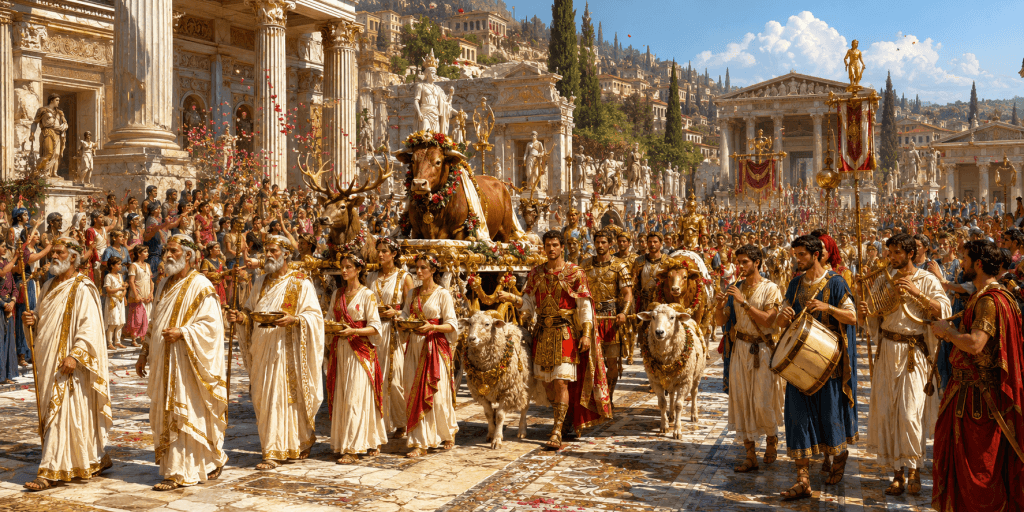
The inscription also mentions ceremonial processions and night rituals. Processions, or pompe in Greek, were very impressive in ancient cities, especially Ephesus.
A procession might include:
Priests and holy officers,
city administrators,
youth and the common people,
musicians,
sacrificial animals,
incense bearers,
sacred symbols belonging to the god,
sometimes a statue of the god or objects representing the god.
In a large city like Ephesus, such a procession would have been magnificent enough to be etched in the public memory. The city’s identity was particularly strong in the cult of Artemis. Artemis was not just a goddess, but like the protective force of Ephesus. Documents and research indicate that Ephesus was home to the Temple of Artemis, which is considered one of the Seven Wonders of the Ancient World.
Nighttime ceremonies created a more special atmosphere. Torches, incense, hymns, and prayers offered in the darkness made the ceremony more impressive. But it’s important to note here: “Nighttime ceremony” doesn’t always mean “secret mystery religion.” The mention of a night ritual in the inscription indicates the time and sacred atmosphere of the ceremony; it doesn’t necessarily imply a closed, secret initiation.
12. The Cult of Artemis and the Duties at the Artemision
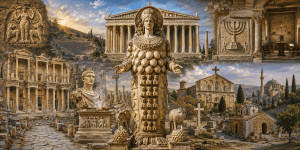
Artemis Ephesia was the greatest sacred power in Ephesus. The Ephesian representation of Artemis was different from the classical Greek huntress Artemis, and she possessed strong local characteristics. For the people of Ephesus, Artemis was central to the city, fertility, protection, identity, and holiness.
The Artemision, or Temple of Artemis, was a vast sacred institution in its own right. It housed not only priests but also officials who managed the temple’s property, buildings, and security. An academic study indicates that these officials, called Neopoioi, were responsible for construction, repairs, security, and administration at the Artemision.
This is a very important detail. Because the temple was not just a place of prayer; it was also a major economic and administrative center. The temple had lands, gifts, treasures, repairs, storage facilities, and sacred objects. All of these had to be managed in an orderly manner.
In Ephesus, sacred duty meant more than just sacrificing animals; it also meant:
Protecting the temple,
Safeguarding sacred objects,
Carrying out building repairs,
Managing ceremonial expenses,
Ensuring security,
Announcing decisions to the public through inscriptions,
and defining the rights of officials.
13. Shares Given to Officials
The inscription also mentions the shares to be given to sacred officials. This tells us a great deal.
When a sacrifice was made, it was customary for the meat and certain parts to be set aside for specific individuals. Priests, hierophantes, prytanis, or other sacred officials might receive certain privileges. We can view this as a “sacred duty share.”
This share is not merely food, but an honor of the office. The community respects the official because they served in the god’s ceremony. Receiving a share means, “You are part of this sacred order.”
14. There were penalties for non-compliance
In Ephesus, these tasks were not entirely left to voluntary participation. According to the inscription, penalties could be applied if a prytanis failed to perform their duties. Specifically, it states that there was a penalty of 10 Darik stater for a prytanis who did not fulfill their duties, and that this penalty would be administered by the kouretai and hierophantes.
This is very important. Because it shows that sacred duties have a legal aspect.
So, in Ephesus, sacred duty was:
Respect for God,
service to the city,
obedience to the law,
punishment if one fails to perform their duty.
Therefore, sacred ceremony was something much broader than personal belief. It was part of the state order.
In short, sacred duties in Ephesus were performed as follows:
First, the traditional calendar and laws were decisive.
What would be done to which god on which day was regulated according to ancient traditions.
The Prytanis was the main person responsible for the ceremony.
Lighting the fires, providing the incense, and arranging the offerings were within his area of responsibility.
The Hierophantes supervised the sacred knowledge.
He ensured that the ceremony was performed correctly and that the prayers and offerings conformed to tradition.
Incense, fire, hymns, prayers, and sacrifices were used together.
These were the main components of the ceremony.
Prayers were not only personal but also public.
Prayers were offered for the people of Ephesus, the Roman people/state, and the sacred communities.
The cult of Artemis was the largest sacred center.
The Artemision had its own officials, security, maintenance, and administration.
There were penalties for failure to perform duties.
This shows that sacred duties in Ephesus were protected by official law.
In Ephesus, sacred duties were official ceremonies performed to show respect to the gods, but they also upheld the city’s political, social, and legal order.